Why Metal Buildings in Coryell County Develop Condensation Problems
Metal buildings and barndominiums have become increasingly popular throughout Coryell County and the surrounding areas near Killeen. Their affordability, open floor plans, and durability make them attractive to homeowners and business owners alike. However, metal structures present a unique challenge that many owners don't anticipate until it's too late: condensation buildup.
The problem occurs because metal is an excellent conductor of heat and cold. When warm, humid air inside your metal building comes into contact with the cold metal roof or walls, moisture condenses on those surfaces, much like water beads on a cold glass of iced tea on a summer day. In Killeen and Coryell County, where temperatures can swing dramatically between seasons and humidity levels fluctuate, this condensation issue becomes especially problematic. Over time, this moisture can lead to rust, mold growth, structural damage, and deterioration of stored items or equipment inside the building.
The challenge intensifies if your metal building or barndominium has older or inadequate insulation. Poor insulation allows indoor air temperatures to match outdoor temperatures more closely, creating ideal conditions for condensation to form continuously. This is why addressing insulation properly from the start is critical to protecting your investment.
Understanding the Role of Insulation in Moisture Control
Proper insulation does far more than keep your building warm or cool. It acts as a thermal barrier that maintains a stable interior temperature, which directly reduces the temperature difference between indoor air and your metal surfaces. When that temperature differential is minimized, condensation has far fewer opportunities to form.
Many older metal buildings in the region were constructed with fiberglass batts, blown-in cellulose, or even outdated Killeen-area materials like vermiculite insulation. These traditional insulation types have significant limitations. They absorb moisture, settle over time, leave gaps and thermal bridges, and provide inconsistent coverage. Vermiculite insulation, in particular, was commonly used decades ago but is now recognized for its poor performance and potential health concerns. If your metal building or barndominium still relies on these older materials, you're likely fighting an uphill battle against condensation.
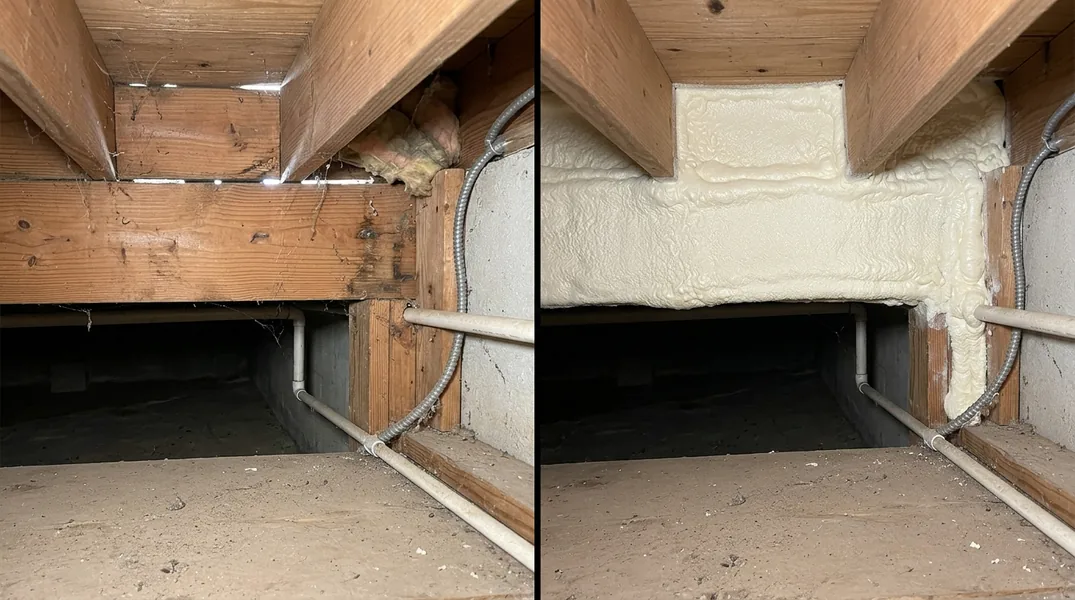
Attic Spray Foam Insulation and other modern spray foam solutions address these shortcomings by creating an airtight, seamless thermal envelope. Unlike traditional insulation, spray foam expands to fill every gap, crack, and void in your metal structure. This continuous barrier prevents warm, humid air from reaching cold metal surfaces where condensation forms.
Insulation Removal and Preparation: The First Step
Before you can install modern insulation in your metal building or barndominium, you'll likely need to address what's already there. If your structure contains old fiberglass, blown-in insulation, or vermiculite insulation, professional insulation removal is essential. This isn't simply a matter of pulling out the old material and installing new insulation on top. Improper removal can leave behind contaminants, compressed debris, or materials that compromise the performance of your new system.
The attic insulation removal process begins with a thorough inspection. Professionals assess the condition of existing insulation, identify any moisture damage, mold, or pest activity, and determine the safest removal method. In Coryell County, where metal buildings may have been exposed to extreme temperature swings and humidity, old insulation often becomes matted, degraded, or contaminated. Removing this material properly ensures a clean surface for new insulation to adhere to and perform optimally.
Old insulation removal also gives you the opportunity to inspect the structural integrity of your metal building. Once the old insulation is gone, contractors can check for rust spots, holes, or damage to the metal itself. Addressing these issues before installing new insulation prevents moisture from being trapped against damaged metal, which would accelerate corrosion and defeat the purpose of the upgrade.
The insulation removal cost varies depending on the size of your building, the type of material being removed, and how much debris needs to be hauled away. Vermiculite insulation removal, for example, may require special handling and disposal procedures. While removal adds to the overall project expense, it's a necessary investment that ensures your new insulation system will perform as intended for decades to come. When you're ready to discuss your specific situation, contact Killeen Spray Foam Insulation at (254) 312-9738 for a detailed assessment and free estimate.
Closed Cell Spray Foam: The Superior Solution for Metal Buildings
Closed Cell Spray Foam Insulation is widely considered the best choice for metal buildings and barndominiums, particularly in regions like Coryell County where condensation is a persistent concern. Closed cell foam has a density of approximately 1.5 to 2 pounds per cubic foot and features millions of tiny, sealed cells that are filled with a low-conductivity gas. This structure creates an exceptionally effective moisture barrier and thermal insulator.
The key advantage of closed cell foam for metal structures is its vapor permeability rating. It has an extremely low permeance, meaning moisture vapor cannot easily pass through it. When applied to the underside of metal roofs or walls, closed cell foam creates a continuous seal that prevents warm, humid indoor air from reaching the cold metal surface. This directly eliminates the conditions that cause condensation to form. Additionally, closed cell foam provides superior structural support and can actually strengthen your metal building by adding rigidity to the frame.
Another benefit is that closed cell foam does not absorb water. If any moisture does somehow penetrate the foam layer (which is rare), it won't be trapped within the insulation material itself. This is a critical distinction from traditional fiberglass or blown-in cellulose, which readily absorb moisture and can harbor mold and mildew growth. For barndominiums where you're living in the structure year-round, this moisture resistance is essential for maintaining healthy indoor air quality.
Open Cell Spray Foam as a Secondary Option
While Open Cell Spray Foam Insulation is less commonly recommended for metal buildings than closed cell, it can still play a role in certain applications. Open cell foam is lighter, more flexible, and more affordable than closed cell. It has an R-value of approximately 3.5 per inch, compared to closed cell's 6 to 7 per inch, so you'd need greater thickness to achieve the same thermal resistance.
Open cell foam is more permeable to moisture vapor, which means it allows some moisture to pass through. In a metal building where condensation prevention is the primary goal, this characteristic makes open cell less ideal as your primary insulation layer. However, some builders use open cell foam as a secondary layer over a closed cell base, or in areas where vapor permeability is less critical. The decision depends on your specific building design, budget, and performance goals. Discussing your project with experienced professionals at Killeen Spray Foam Insulation will help determine which approach makes sense for your metal building or barndominium.
Attic Spray Foam Insulation Cost in Coryell County: What to Budget
When planning a spray foam insulation project for your metal building or barndominium, understanding the financial investment is important. The insulation removal cost and the spray foam installation cost together make up your total project budget. Removal costs depend on the volume of old material, the type of insulation being removed (vermiculite removal may cost more), and local labor rates. Installation costs for spray foam vary based on the square footage of your building, the thickness of foam required, and whether you choose closed cell or open cell.
Closed cell spray foam typically costs more per board foot than open cell, but provides superior performance and requires less thickness to achieve your target R-value. For a metal building or barndominium in the Coryell County area, you might expect to invest between three to eight dollars per square foot for a complete closed cell spray foam system, including removal of old insulation. Larger projects often have a lower per-square-foot cost than smaller ones. Rather than guessing at pricing, reach out to Killeen Spray Foam Insulation for a comprehensive quote. Call (254) 312-9738 or request a free estimate and let our team assess your specific situation.
Remember that spray foam insulation is an investment in the long-term protection and comfort of your metal building. It reduces energy costs, prevents costly moisture damage, and can extend the lifespan of your structure by decades. When you factor in avoided repairs from rust, mold, and structural deterioration, the return on investment becomes clear.
Why Professional Installation Matters for Metal Buildings
Installing spray foam insulation in a metal building requires specialized knowledge and equipment. Metal structures present unique challenges, including the need to ensure proper adhesion of foam to metal surfaces, managing the thermal expansion and contraction of the metal itself, and accounting for the building's geometry and ventilation needs. DIY foam kits are available, but they rarely deliver the consistent, professional results that a trained contractor can provide.
Professional installers understand how to prepare metal surfaces for optimal foam adhesion, how to apply foam at the correct thickness and density, and how to work safely with the chemicals involved. They also have experience identifying and addressing potential issues like inadequate ventilation or pre-existing moisture problems before they're sealed behind new insulation. For a significant investment like insulating a metal building or barndominium, professional installation ensures you get the performance and durability you're paying for.
Killeen Spray Foam Insulation has extensive experience working with metal buildings and barndominiums throughout the region. Our team understands the specific challenges that Coryell County properties face with condensation and moisture control. We handle everything from initial old insulation removal through final foam application, ensuring a seamless process and a superior finished product. Ready to protect your metal building from condensation and moisture damage? Call us today at (254) 312-9738 or visit our website to request your free estimate.
Looking for a professional spray foam insulation contractor in Killeen? Killeen Spray Foam Insulation responds fast for all your spray foam insulation needs.
Get a Free Quote