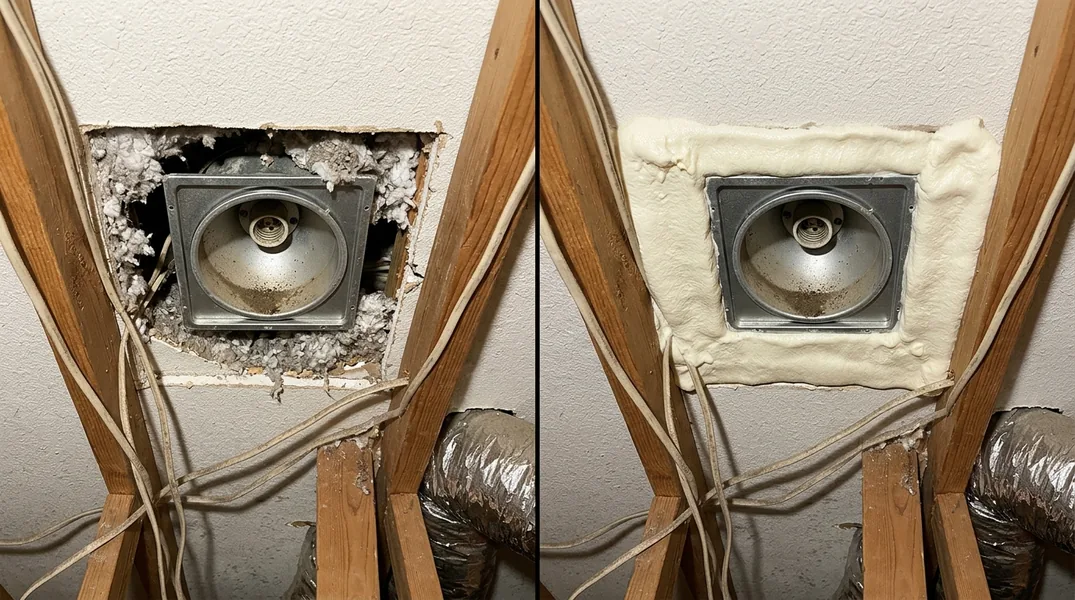
Understanding Spray Foam Insulation R-Value Per Inch
Attic Spray Foam Insulation has become increasingly popular among homeowners in Killeen because of its superior insulating properties compared to traditional fiberglass batts or blown-in cellulose. One of the most important metrics to understand is the R-value per inch, which measures how well a material resists heat flow. The higher the R-value, the better the insulation performs.
Closed Cell Spray Foam Insulation typically delivers an R-value of 6.0 to 7.0 per inch, making it one of the most efficient insulation options available today. Open cell foam, by contrast, provides approximately 3.5 to 3.6 R-value per inch. This significant difference means that closed cell foam requires less thickness to achieve the same insulation performance as open cell foam. For homeowners seeking maximum energy efficiency in their attics, closed cell foam offers superior thermal resistance in a thinner application.
R-Value Requirements by State: What Does Texas Require?
Texas, where Killeen is located, has specific building code requirements for attic insulation. The International Energy Conservation Code (IECC), which Texas has adopted, recommends an R-value of R-38 for attics in most of central Texas, though some zones may require R-49. These recommendations are based on your local climate zone and heating/cooling patterns. Understanding your specific requirement is crucial before investing in any insulation upgrade.
The difference between R-38 and R-49 might seem modest on paper, but it translates to real dollars in energy savings over time. If you're using closed cell spray foam with its 6.5 R-value per inch, you would need approximately 6 inches for R-39, or 7.5 inches for R-49. With open cell foam, you'd need roughly 11 inches for R-38 or 14 inches for R-49. This is where the choice between foam types and thickness becomes both a technical and financial decision for homeowners in central Texas.
How Thick Should Spray Foam Be? A Practical Guide
Determining the right thickness for your attic spray foam depends on three main factors: your target R-value, the type of foam you select, and your budget. Many homeowners assume thicker is always better, but that's not necessarily true. The goal is to reach your local code requirement efficiently while maximizing your return on investment. For most homes in Killeen, a thickness of 5.5 to 7.5 inches of closed cell foam will satisfy both energy code and practical performance needs.
One advantage of spray foam over traditional insulation is that it creates an air-sealed barrier as it expands and cures. This means you're not just adding insulation value; you're also sealing air leaks that would otherwise allow conditioned air to escape. A 6-inch application of closed cell foam provides an R-value around R-39 while simultaneously addressing air sealing concerns. If you're considering Open Cell Spray Foam Insulation, expect to apply 10 to 12 inches to achieve similar R-value performance, though open cell is more cost-effective and still delivers excellent results for many homeowners.
Air Sealing vs. Full Foam: Which Strategy Makes Sense?
The decision between air sealing alone and investing in full attic spray foam insulation depends on your current situation and long-term goals. Air sealing involves identifying and closing gaps, cracks, and penetrations in your attic where air leaks occur. This is a critical first step and can be done with caulk, weatherstripping, and foam sealant around electrical boxes, ductwork, and rim joists. If your existing insulation is in good condition and your primary concern is energy loss from air infiltration, targeted air sealing might be sufficient.
However, most homes in central Texas benefit from a comprehensive approach that combines air sealing with spray foam insulation. When you apply spray foam, you accomplish both goals simultaneously. The foam expands to fill gaps and seal air leaks while providing superior insulation value. If your attic has aged insulation, inadequate R-value, or significant air leakage problems, full Attic Spray Foam Insulation is typically the more cost-effective solution over time. You'll see lower utility bills, more consistent indoor temperatures, and reduced strain on your HVAC system. For homeowners in Harker Heights and surrounding areas, a professional energy audit can help determine which approach is right for your home.
Insulation Tax Credits and Rebates: Don't Leave Money on the Table
One of the most overlooked aspects of attic insulation upgrades is the availability of tax incentives and rebates. The federal government has long recognized the value of energy-efficient home improvements and offers tax credits for qualifying insulation projects. An free estimate from a reputable contractor should include information about current incentives available in your area. Many homeowners are surprised to learn that they can recover 30 percent or more of their insulation costs through tax credits, making the project significantly more affordable.
Beyond federal incentives, some utility companies and local programs offer rebates for energy efficiency upgrades. These programs vary by year and by provider, so it's worth checking with your local utility company in Killeen before finalizing your project. When you combine these incentives with the long-term energy savings from spray foam insulation, the return on investment becomes compelling. A project that might cost $3,000 to $5,000 can be reduced by $900 to $1,500 through available tax credits and rebates, depending on your circumstances. This financial boost can make the difference between upgrading your attic now or waiting several more years.
Attic Spray Foam Insulation Cost in Killeen: What to Budget
Understanding the pricing structure for spray foam insulation helps you make an informed decision. Closed cell spray foam typically costs between $1.50 and $2.50 per board foot installed, while open cell foam ranges from $0.75 to $1.25 per board foot. For a typical 1,500 square foot attic requiring 6 inches of closed cell foam, you can expect to invest between $3,500 and $5,500. Open cell foam for the same space would cost approximately $2,000 to $3,500. These figures vary based on attic accessibility, existing insulation removal requirements, and local market conditions.
When evaluating pricing quotes, remember that the cheapest option isn't always the best value. A contractor who uses high-quality materials, carries proper licensing and insurance, and provides a comprehensive warranty will likely charge more than a fly-by-night operation. Killeen Spray Foam Insulation stands behind our work with professional installation and customer service. Call us at (254) 312-9738 to discuss your project and receive a transparent quote with no hidden fees. We'll explain exactly what you're getting and why our investment in quality materials and craftsmanship delivers superior long-term performance for your home.
Looking for a professional spray foam insulation contractor in Killeen? Killeen Spray Foam Insulation responds fast for all your spray foam insulation needs.
Get a Free Quote